Energy Systems 101

Exercise truly is medicine. Understanding the body's energy systems is key to optimizing your approach to exercise and training.
This article provides:
- A basic overview of the body's energy systems and how they function.
- Sample cardio exercise protocols to help you train each system.
Note:
- Chatham Works is equipped with a state-of-the-art heart rate monitoring system - Myzone- which is a powerful tool to help you stay motivated and accountable, understand your body, and be more precise in your approach to cardio-based training.
- Our Personal Trainers are an excellent resource should you want to learn more about how you can best apply these concepts to your personal health and fitness journey.
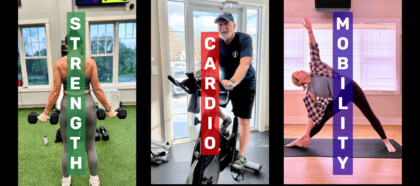
We believe that an ideal approach to fitness should include cardio, strength training, and mobility work. Click here to read why.
Cardio Benefits
It’s well understood that cardiovascular fitness is foundational to both overall health and athletic performance. Here's a quick list of some of the many benefits of improving your cardiovascular fitness:
- Improve body composition and reduce body fat.
- Increase endurance, stamina, and overall physical ability.
- Reduce the risk of - and manage - adverse health conditions like type 2 diabetes, high blood sugar, metabolic syndrome, stroke, and certain types of cancer.
- Strengthen your heart, lower blood pressure, increase high-density lipoprotein (HDL - the "good," cholesterol) and lower your low-density lipoprotein (LDL - the "bad," cholesterol).
- Strengthen your immune system.
- Improve your mental health, manage depression and anxiety, and improve sleep.
- Increase predicted lifespan, and improve your overall quality of life - especially as you age.
(Yes, exercise really IS medicine!)

Having a basic grasp of the energy systems (aka metabolic pathways) our bodies use to create energy and how they work is critical to understanding how to improve your cardiovascular fitness. (Note that this is a highly technical subject, so we're not going to get too far into the weeds.)
All About ATP
Our bodies utilize multiple energy systems to enable us to function and move. But the single source of "fuel" our bodies use for all cellular function is a substance called ATP (adenosine triphosphate).
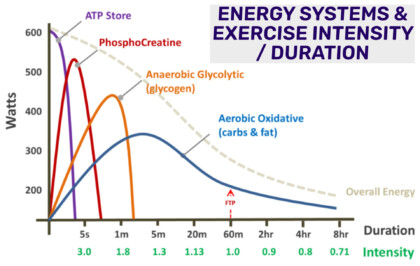
We store a small amount of ATP within our muscles, but the majority is synthesized from the foods we eat. Digestion breaks the food down into its three constituent macronutrients: carbs (glucose), fat (fatty acids), and protein (amino acids). These are then transported through the blood to be used in one of the three energy systems: the phosphagen pathway, the glycolytic pathway, and the aerobic pathway.
These pathways each provide ATP (fuel) for us to burn. They overlap in terms of how they function, and work in very different ways. One major difference is that they operate either anaerobically without requiring oxygen (via the phosphagen and glycolytic pathways), or aerobically in the presence of oxygen.
🔑 KEY CONCEPT ➔ Mitochondria
Often referred to as "the powerhouse of the cell", mitochondria are organelles that exist in nearly every cell in the human body, and produce 90% of the energy (ATP) our bodies need to function. They're also responsible for regulation of cellular longevity across multiple organ systems. Therefore, mitochondrial health is essential to our overall health.
Mitochondrial dysfunction is related to metabolic syndrome, neuronal diseases, cancer, cardiovascular and infectious diseases, and inflammatory disorders.
Mitochondria can to adapt to changes in metabolic (energy) demands to increase their capacity for ATP synthesis, and also clear out old or dysfunctional mitochondria. That means we can improve the health and function of our mitochondria - and our physical capacity and overall health - through exercise.
The 3 Pathways ...
① Phosphagen Pathway ➞ Anaerobic, Very Short Duration, Highest Intensity (Zone 5 - 90 to 100% of max HR), Limited Opportunity for Improvement
Also called ATP-CP, the phosphagen pathway starts by burning the small amount of ATP that's stored in our muscles. From there the body can recycle any available creatine into a small incremental amount of ATP. This pathway functions anaerobically (without oxygen), but only provides enough energy to enable 10-15 seconds of very high intensity activity.
➔ You can improve the efficiency of the phosphagen pathway by making sure your body has adequate creatine (via diet and supplementation), and through high intensity exercise. But given that it only lasts a short time, the practical benefits will be limited unless you're a specialized sprint/power athlete.
➔ EXAMPLE WORKOUTS: Ten rounds of 10 to 15 second bursts of maximum effort cardio intervals (sprint, bike, row, ski, etc.), followed by 3 minutes of active recovery.
② Glycolytic Pathway ➞ Anaerobic, Short Duration, High Intensity (~Zone 4: 80 to 90+% of max HR), Good Opportunity for Improvement
The glycolytic pathway uses the energy contained in glycogen (from carbs) in our muscles to create ATP. Essentially functioning as a bridge between the between the phosphagen and aerobic pathways, anaerobic glycolysis can produce ATP quite rapidly for use during activities requiring large bursts of energy over brief periods of time (30 seconds to three minutes max).
➔ You can improve the efficiency of the glycolytic pathway via high intensity interval training, and through diet by making sure you have a proper glycogen store.
➔ EXAMPLE WORKOUTS: Intervals of shorter duration, sub-maximum intensity cardio, followed by intervals of rest or active recovery (AR) for a duration of 1x to 3+x the work period. For example:
- Two or more sets of 6+ rounds of 30 seconds ON / 30+ seconds rest (or AR).
- Two or more sets of 5+ rounds of 60 seconds ON / 60+ seconds rest (or AR).
- The (in-)famous "Norwegian 4x4" protocol: four rounds of 4 minutes ON / 3 minutes of AR.
- Fartleks: This rather colorful term means "speed play" in Swedish, and it refers to a training protocol that was developed in the 1930's to help Swedish cross-country runners beat the dominant "Flying Finns". Still used today in many training settings - including large group runs of Kenyan marathoners - it entails rolling intervals of short, more intense effort, with each burst followed by a longer period of active recovery. Although it's best known in the context of running, it can be used with just about any form of cardio. For example, the basic idea behind fartleks - rolling intervals - is the underpinning of most Spin classes.
⚠️ TRAIN SMART:
- ☯️ The harder you train, the more you need to prioritize nutrition and recovery. It's generally considered to be unwise and potentially counter-productive to train at high intensities two or more days in a row. So no more than 2 or 3 times per week is optimal. Recover as hard as you work.
- Intensity ⬆︎, Volume ⬇︎. Reduce your overall workload when training at close to maximum effort. A "true Tabata" workout is only 4 minutes long. (And - yes - that video is real!) Overtraining is a real thing and can have equally real consequences. Bottom line ➔ go hard without overdoing it in terms of work volume, and then let the medicine work!
- 🍎 💧 🥚 Make sure you have your nutrition and hydration dialed in. Have some simple carbs (ex: fruit) 30+ minutes before your workout, and be sure to pre-hydrate. After your workout, consume more simple carbs within 30 minutes to replenish depleted glycogen, and have a healthy, protein rich meal within about two hours.
③ Aerobic Pathway ➞ Aerobic, Long Duration, Low to Moderate Intensity (Zones 2 & 3), Almost Unlimited Opportunity for Improvement
Aerobic respiration occurs within the mitochondria, the organelles located inside cells that produce energy. It uses all three macronutrients (carbs, fat, and protein) through a variety of complex processes that are beyond the scope of this discussion. But it's important to note that each requires the presence of oxygen. The aerobic pathway is utilized during longer-duration, lower-intensity activities after the phosphagen and glycolytic systems have fatigued.
Zone 2 training strengthens your cardiovascular foundation - in part by boosting mitochondrial health and efficiency. Elite endurance athletes (runners, cyclists, rowers, etc.) spend a tremendous amount of time training at this lower intensity.
➔ The simplest way to improve the efficiency of the aerobic pathway is long, slow, steady cardio (Zone 2), and the ceiling for potential improvement is very high. Of course that entails putting in a very high number of training hours. Because intensity is low, it's possible to take on a high workload without putting excessive stress on your nervous system (provided you prioritize recovery and nutrition). This approach to training can be done in numerous forms (cycling, speed-walking or running, rowing, etc), but the time commitment and boredom factor make this approach unattractive to most.
➔ EXAMPLE WORKOUTS: Pick your cardio poison and go at it at a steady pace for 45+ minutes, but don't allow yourself to work above a conversational pace.